Mr Gates – Sir, please tell me again why we’re here?

Mr Gates – Sir, please tell me again why we’re here?
We have a large yard with woodsy woods on three sides – it is not uncommon to have invasive plants and animals find their way into our yard competing with, or eating the flowers, fruits and vegetables we’ve tried to cultivate – it’s a give and take relationship between the natural nature surrounding us, and incorporating non-indigenous plants (cause their pretty) into the yard – we no longer aggressively work to keep the two efforts apart – it can easily become exhausting, and even damaging to the natural nature around us.
Despite the conflicting elements, every now and then some of the plants we bring in survive and press through to maturity – we’re still disappointed when pretty plants fall prey to the elements, we’re also equally excited when one burst forth into all its anticipated grandeur.
Pretty plant – Exhibit A:

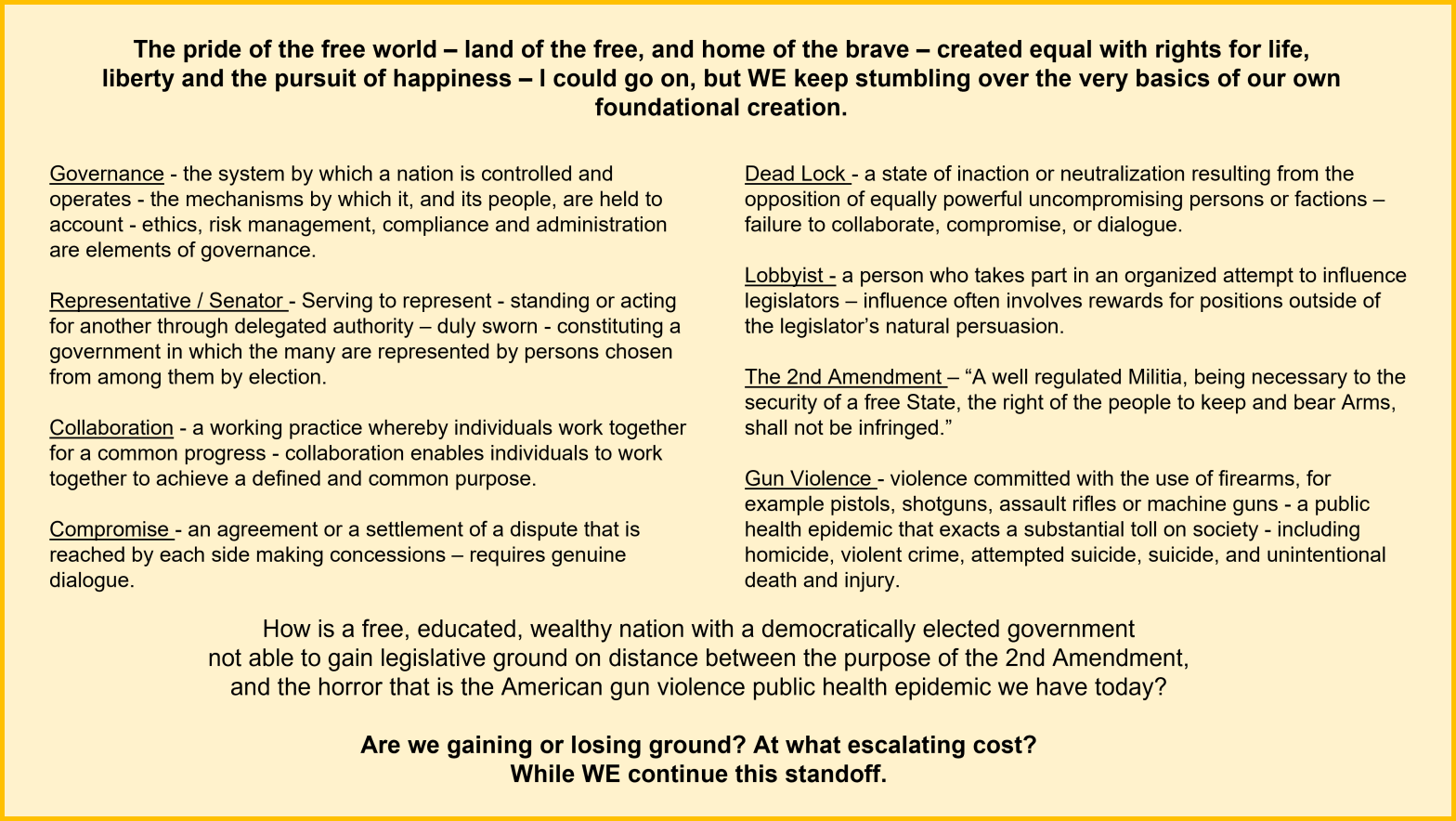
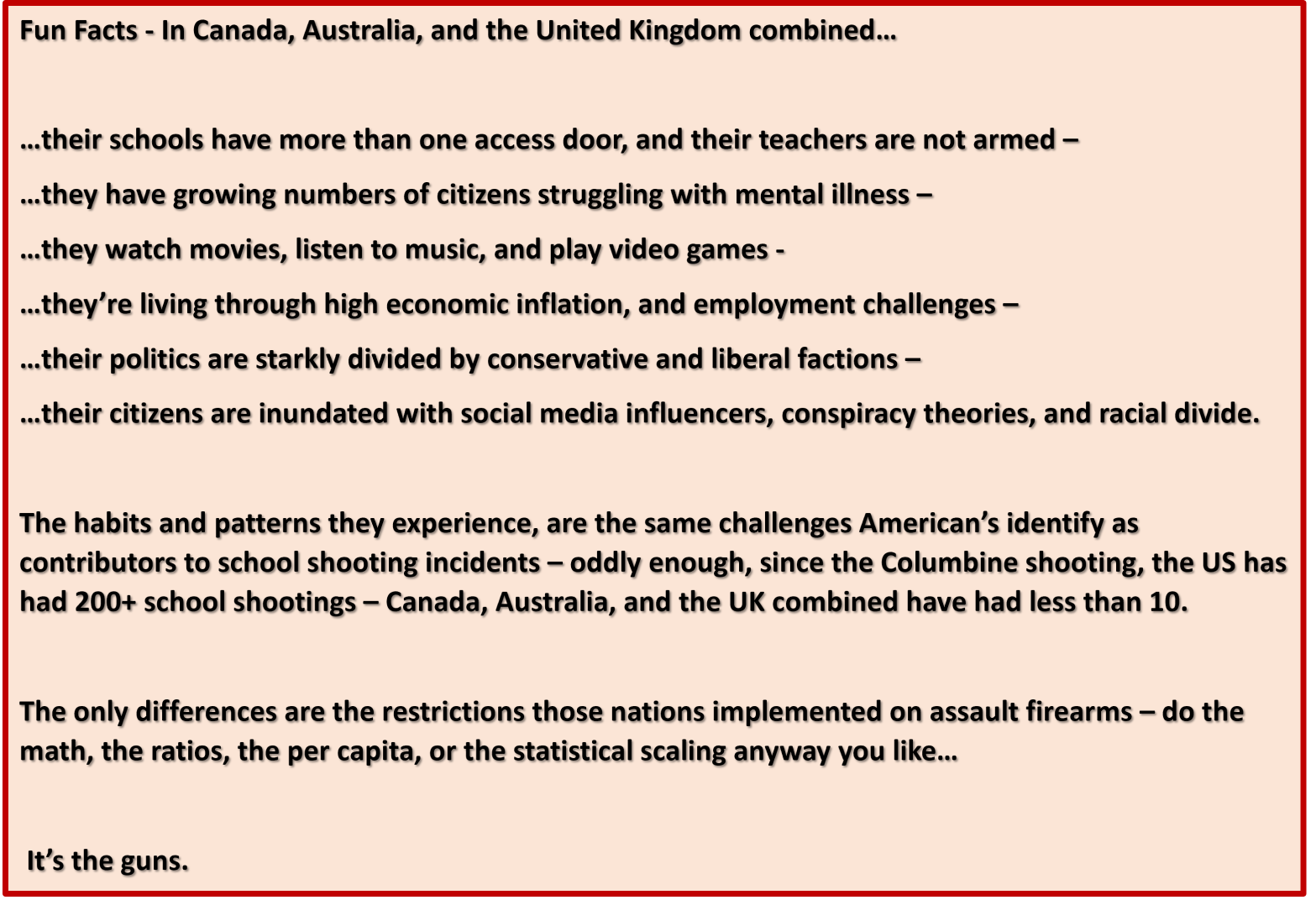
Love them or hate them, guns, politics, inflation, national identity, and the congressional hearings into the events of January 6 all focus attention on a single decisive person – no, not an elected person – I mean the voter – the voter who has been pulled into very divisive directions – the voter who is tasked with selecting elected representatives and leaders for all levels of our government.
Through the Obama, Trump, and now Biden years, voters have hung their heads and shrugged that nothing can be done to address our divided nation – nothing seems to change – nothing seems to fuel the dying light at the end of the national tunnel – our nation is so very divided – codified into positions that even conflict with our proclaimed values, for the sake of aligning sound bites and memes into political positions – we are two tribes, for no other reason than we’ve been made to believe that we must be divided – and yet, we all refuse to budge, because we (sadly) think we believe in this divide.
In our heads, our divide passes as individual shrewdness, or even intelligence – this divide covers as an excuse, that if we believe nothing can be done, then no one must take responsibility, or be blamed – because, if nothing can be done, then we’re all off the hook, and we can shamelessly feed and perpetuate the divide.
Truth be told, national divide is always wrong – the important thing to remember about national divide is that it erodes our national strength – regardless of congressional majority, the nation loses if we’re not able to allow governance to be applied to the collective “us” – there is no such thing as “liberty and justice for all” if we’re all going to demand that everyone must think and believe in only one version of America – we just keep going further down this path, and finding ourselves more divided, and blaming each other for the divide – this is NOT, NOT, NOT what this country was founded on.
But, what if the country could be saved – not because of our greatness – but, because enough people summoned the courage to do the right thing – to see the greater good of the nation – to desire unity more than individual positions – knowing sometimes the right thing is terrifying and unpopular – sometimes, the people doing the right thing is the result of being fed up with long spells of doing the wrong things – we’ve learned that it’s wrong for only one version of America to matter – the lesson is, that every legal version of America matters, and should be given a voice – how have we become a nation that turns a blind eye, and a deaf ear to those being wronged, and proclaim this indifference to be better for America? It’s shocking.
Many Americans on both sides of the divide, sit back and hope all this upheaval will fade into history and we’ll somehow be better for it – I believe we’ve got it wrong, because time is not a true healer – time only hides the divide, and allows it to resurface uglier and angrier somewhere down the road – many will say we’ve already seen the worst of our divide – but, I believe the worse is yet to come.
Our divide continues to define us – the world no longer sees us as leaders – they now know the full divided truth about us – we let our politics, guns, inflation, religion, national identity, and the January 6 committee grossly divide us instead of learning and growing as a nation – these are not things we should just shrug off.
So here’s where we, the voter come back into the story – we’re failing at our greatest opportunities to learn and grow, because we are letting these opportunities divide us – Americans, have failed to take heed and safeguard against ourselves and our government, because we believe the delusion that the Constitution has some self-correcting apparatus to stabilize the nation without intervention from the people – the people are that apparatus to ensure that national divide does not ruin this great nation – whether we make good choices or bad ones, or we’re people who are active or passive – we must never let ourselves become divided – the people are the tools, the process, the power, and the responsibility – people like you and I.
So when you hear somebody saying something you disagree with, consider the nation and not just yourself – today, tomorrow, or at any time during these challenging days, if we find that we continue to accomplish nothing important, keep in mind: That will only be true if you let it be true.
Brave and patriotic people can stand up and stop national divide at any time – brave and patriotic people can step up to hold each other, our government, and this nation accountable – be one of those people.
BLUF: They Are All Liars – you can quote me on this (LOL).
Angry consumers tend to place blame for the nation’s economic woes based on no more evidence than a one-sided news story, social media (like minded) scrolling, headlines from self-proclaimed subject matter expects with no credentials, or bootlegged economic insight from our local bickering circles – perhaps there’s more to consider than this.
Not only do we haphazardly place blame, but we do so with great passion and confidence – leveraging only sound bites, memes, or things that “sound” right to us – this is the way many of us see, react, and deal with our current economic woes – even though we’re well educated, insightful, experienced, and simi-sophisticated… we act like simple minded buffoons as well.
To be fair, our nation’s economic woes are not simple, and have many complex contributing factors – there are also layers of blame aimed at elected officials & government agencies, industry & corporations, distribution & supply chain, labor, pricing, plus greater impact factors like fuel prices, preexisting regulatory requirements, and a pandemic (just to name a few) – each of these contributors come with unique perspectives on the cause of these economic woes – it can all be very confusing and misleading.
What’s really frustrating for me is how quickly we draw conclusions to place blame with so little information – remember, our “go to” sources are typically sound bites, memes, or things that “sound” right to us – also remember, we’ve compartmentalized ourselves into three basic camps: Right Leaning, Left Leaning, and Independent Leaning – furthermore, our allegiance to these self-assigned camps are ever more codified with each new crisis on the horizon – so, we find ourselves being more loyal toward our camps, and doing less basic research about the economic woes the nation is facing.
Interestingly, reference our economy – there is a collective think tank lead by the US Economic Administration and the Department of Labor which is made up of (Left, Right, Independent) resources that research, follow, and report on economic statuses and conditions – this collective effort has been quietly sharing notes and ideas since 2014 – some of their better-known participating organizations are: The Balance, Equitable Growth, Groundwork Collaborative, Economic Policy Institute, and National Bureau of Economic Research, plus half dozen lesser know players.
This think tank’s objectives are to “…work with economic theories & policy experts, conservative & progressive economic ideals, industry insiders & activists from economic causes at community & national levels to: Develop and advance more equitable economic practices. Collaborate & foster ideas and pathways to share economic trends & information. Break down economic crisis silos. Research and investigate critical economic issues and campaigns.”
As it turns out, there are many think tanks out there evaluating and researching any number of national level challenges from multiple perspectives – some are more agenda driven than others, but they all collect and share impactful information relevant to national challenges – they also make this information available to the public – meaning, their findings are easy to research – almost as easy as hearing a clever sound bite, and running with it as though it were Biblical.
Here’s my first point: There are a lot of facts to consider beyond our respective agendas, sound bites, memes, or things that “sound” right to us, if we’ll just put a little effort into it – in fact, “putting a little effort into it” was the only option we had, before social media, agenda driven news, and our respective camps started force feeding our opinions to us.
I’m so tired of slanted news, agendas, sound bites, or memes, that I welcome any collective, collaborative effort on topics pertaining to subjects that divide us – specifically since our expanding national divide hits on so many topics, not the least of which is our economy – collective efforts naturally provide less biased facts and insight – they leverage quotes for CEOs/CFOs and stockholders, reference quarterly and annual profits and earnings reports – spending and cost trends, distribution and inventory challenges, etc., etc.
So, when I consider our economic woes, and I hear positive or negative takes on our economic factors, I try to dig into it – I’ll confess, I tend to follow and embrace theories I like, or fit my personal agenda – this is the easiest, and most natural way to evaluate information – but it’s also the worst way to validate information – so, I try to avoid chasing my own tail down my own information rat hole (like most of us do), and to the point of this rant… I try hard to seek facts from sources with nothing to gain other than transparency, fairness, and balanced agendas – these collective, collaborative efforts pull information from multiple sources, consider questions from left, right and center, and present their findings supported with source documents.
So, here are some fun economic story lines discovered by looking deeper than sound bites and memes – because it’s important for the American people to clearly know the real cause, cost or harm associated with economic factors being considered.
One of the most telling sources of economic insight came from participants in, and reading minutes from hundreds of corporate quarterly earnings calls – these are routine calls CEOs and CFOs have with investors and shareholders – lately, the chatter has been focused on the origins of inflation, specifically pricing – not surprisingly, inflation takes on a unique perspective if you’re in the top 5% of a multi-million (or billion) dollar corporation, and are trying to make a profit for your investors and shareholders.
For example, in April 2022 Coke’s CEO was pressed on corporate pricing – were price increases being passed on to consumers justifiable – he was clear, there will be more price increases – Coke’s CEO, “If we’ve got a choice, we’re going to take the price increase as far as our sales goals can weather it.” Coke’s CEO is not alone in this position – the Hostess Cakes CEO, “When all prices are going up, it helps us take more.” – consumers don’t really know which price increases are justified, verses which price increase are gouging simply because corporations can.
Now, to be fair to Coke and Hostess Cakes, capitalism is going to capitalism (so to speak) – it’s the reality of the economic concept of “what the market will bear” – but as it turns out, the underlying theme in many of these earnings and profit meetings is, how far can we press price increases under the guise of uncontrollable factors, inflation being the current factor – perhaps the question corporations need to be asking themselves is, “During these moments of national crisis, and transitioning of our economy, how much is enough?” Ultimately for CEOs and CFOs, it boils down to satisfying investors and shareholders, verses consumers – a CEO or CFO could get fired for not taking advantage of a profit opportunity – the cold hard facts are, corporations in in business to make money, not friends – but is it that narrow? Could corporations increase their profits, without further stimulating inflation?
From the consumer’s perspective, are corporations to blame for opportunistic higher prices, or are corporations unable to avoid higher prices? Consumers simply do not trust corporations or government to do or enforce the right thing – this is a tragic position for citizens of a nation that can be anything it chooses, and afford every citizen to be well off, but chooses to be greedy.
Let’s not only kick Coke and Hostess in the face – other corporations like Chevron, Tyson, Hormel, Exxon, etc… also share in the same flavor of earnings and profit meetings – themes in these meetings kept coming back to these same four points, from the corporation perspective:
Like many industries, increased pricing naturally generates higher profits to extended sectors of the economy – for example, banks and credit card companies – these financial institutions typically have set rates for categories and caliber of customers – the customer now spends more, due to inflation and the financial institution makes more money without effort – oddly enough, in the same earnings and profit meeting, VISA CEO announced their profit increases, and rate hikes without elaborations other than to say, “keeping in step with inflation” – perhaps the perfect example of, have my cake and eat it too.
To be fair to corporations, there are real factors that stimulated inflationary conditions which lead to natural price increases – but to also be fair to consumers, there are widespread “opportunities” for price increases that are largely ungoverned, and actually add to worsening inflationary conditions – corporations know there are no “checks” in place to prevent unjustified price increases.
The road to our ongoing inflationary conditions looks something like this (broad strokes, so don’t nitpick) – buckle up – COVID drove a number of challenges like supply chain problems, and available labor – then crude oil supplies were challenged (we’ll discuss oil factors in greater detail further down) causing fuel price increases, which impacted cost of product and material distribution – these are very real factors for corporations to digest and still remail solvent – on the other hand, consumers did see price increases, but are now seeing even more price increases with no other cause except “the other guy’s” prices went up – the economy (triggered by corporations and markets) placed projected and intangible stressors (from quarterly reports/meetings, opportunistic behavior, and air cover) on itself which further drove inflationary conditions higher – we know this because instead of major corporations struggling alongside consumers, their profits are raising at record levels – to worsen the plight, major corporations indirectly set production, distribution, and pricing rhythms for smaller corporations extending the impact of inflationary cause and effect – during all this the FED bumps interest rates (twice) causing a slight pause in inflationary conditions, only to restart itself with little tangible cause – each rate bump came during a higher inflation stress point, at increasing rates of inflation – each time one of these eight contributing factors hits, markets are also impacted – futures and projections ebb and flow – market gaming kicked in – investor opportunists fleece fellow traders, family and friends – value of the dollar stair steps up and down – GDP projections further roller coaster market gains and losses – all recking havoc on consumer’s savings/investments – my point, inflation isn’t spinning itself out of control, WE are spinning it out of control – which didn’t have to happen – this is a very high level view, but it’s also in line with many economist who do not find themselves tethered to a political party.
As a consumer, we may never know what real inflationary conditions are, verses perceived (manipulated) inflationary conditions – but there are some real facts for consumers to consider when deciding where to spend their dollars – consumers should know, these quarterly and annual earnings reports include things like distinguishing the difference between real and discretionary costs and markups – the Economic Policy Institute put the national average of pricing markups at 54% discretionary of pricing mark ups – so, only 46% of markups are valid according to their own corporate reports – consumers don’t expect corporations to take losses, or fault corporations for taking profits – but they may object to discretionary greed.
We all learned in ECON-101 that prices are set at the intersections of supply and demand, and corporations will compete to keep prices lower – today, there are evolving power dynamics that override normal pricing, due to market powers – there are no political agencies or industry standards to keep corporations for abusing their market power to control pricing, inventories, and product placement – politicians could call out corporations for abuses, if it favors their political party line – in fact, politicians will often help cast blame elsewhere, if the corporation’s market power supports a party line – ECON-101 hasn’t had a chance to be proven or played out for many years.
I digress – I’ll try to stay focused on inflation – in the Fall 2021 the NEC called out the meatpacking industry for unjustified price increases – National Economic Council Director, Brian Deese outlined how industry consolidations were part of price problems – corporations like JBS, Tyson Foods, Cargill Meats, and National Beef Packing Corp essentially consolidated and controlled most of the market – evidence show these four industry leaders (i.e. market power) regularly raised prices and generated large profits in controlled parallel efforts – they also squeezed ranchers (supply sources) to control their costs – how was this not pandemic profiteering? Why is there not regulatory statues in place to manage unjustified price gouging?
In Jan 2022, FED Chairman, Jerome Powell was questioned by Congress about potential industry monopoly’s (due to industry consolidations) driving up prices which could lead to inflation – after several minutes of Q&A back and forth, Chairman Powell eventually acknowledged, “corporations are raising prices because they can” – meaning prices are not being competed down (ECON-101) – this interview, as well as the finding by Brian Deese were short-term indicators before inflationary conditions erupted on consumers.
Necessities are very vulnerable to unjustified price increases – pricing power is a flavor of market power – diapers, formula, gas, food, medicines, etc – our nation has done a poor job of controlling costs of necessities – the definition of necessities is “the fact of being required or indispensable” – that alone begs for leader level control, regulations, compassion, consideration, etc… to prevent necessities from being gouged by industry because they can – there are thousands of examples of inflated pricing on items of necessity, not the least of which is insulin – remember, this nation offers (for free) tons of information about profit margins for all industries – especially for industries for necessary items – no one is going broke producing and distributing diapers, but they absolutely live better, in a much larger house, with more boats and toys than you and I have.
Remember there are lots of factors in play – consider 50 years of America building an economy that worked great for large industry and Wall Street, but maybe not so well for the consumer – we had waves of mergers and acquisitions leading to a highly concentrated sectors of industry restricting the economies ability to govern itself – a surge of deregulation across several industries saved tons of costs, but loosened safeguards and made second and third order risk factors more perilous – a rush for low cost outsourcing and offshoring fanned out across the world hungry for cheaper parts, supplies and labor – a fragile supply chain without resilience or redundancies barely held on until the pandemic snapped it – new adaptive profit ideas blossomed out of high risk, short lived, restructuring, selling off, buying in, and creative financing ventures – it’s like any endeavor that takes on risks to gain rewards – it works until it doesn’t – the “before” picture of this economy worked until it didn’t – there was money to be made, but why not take precautions?
Let’s get this out there, because I know many of you are thinking it – What about the workers? Aren’t workers demanding more money and benefits which are causing prices to go up? YES, but not all situations fit all causes – this is very true for small businesses and micro-sectors of industry – however, as the size and scope of a business/industry increases, so does it’s potential to provide adequate wages and benefits to workers – the national average of prince increases attributed to labor was 8% in 2021 (which is a subset of the 46% validated cost markup mentioned earlier) – so labor did contribute to price increases, but only 8% of the total markup – let’s do the math, 8% = labor and 54% = profit – meaning, at the national level, we can certainly afford to pay our workers adequately – but we also know this is not always true for small business and micro-sectors of industry – but the resources are there (54% of markups went toward profits at a national average) – short of regulating them, industry and the market can bear the cost of paying workers – how to make them do it (if they don’t) is another (very long) rant for another day.
One more hot button item then we’ll wrap this up – gas prices – I’m going to share numbers and facts I hope you’ll look up and validate – I recommend going to The US Energy Information Administration (EIA) and scroll through their oil and gas artifacts, statistics and charts – the Oil and Gas Industry itself also has extensive records to explore – high gas prices have a direct impact on pricing of products that require distribution (land, air, or sea) – the price of fuel at the pump is already a crisis – gas prices are directly connected to many things, but the most significant is amounts of crude oil reserves (national and industry reserves) – crude oil is staged, and in phases of distribution all over the world for eventual production into gas/diesel – let’s take this on a little at a time.
There are a great many theories of why crude oil supplies are pinched – first oil reserves:
Now, even though US is the largest producer of crude oil, industry, government and watch dog organizations all indicate different causes for this reduction, and no increase of production, creating a shortage of crude oil – my opinion based on research of all three sources as to why we weren’t drilling more… oil executives blamed Wall Street – nearly 60% cited “investor pressure to maintain capital discipline” as the primary reason oil companies weren’t drilling more despite skyrocketing prices – in simple terms, it appears the oil and gas industry leaders are limiting production in order to keep prices high.
In addition to reserves of crude oil, the next major contributing factor for gas prices is the pace of refinement of oil into gas/diesel – referencing the same sources above, US oil refinement is also down for the second year in a row – gas refinement is down, and demand is up due to lifting of COVID restrictions – this creates a natural price hike – low inventory, higher demand (ECON-101) – but gas prices are surging well past the lifting of COVID restrictions – just like reduced production of crude oil, industry, government and watchdog organizations also differ about why oil refineries are producing less gas/diesel – I could venture a guess, but you already know what I’m thinking.
Finally, oil and gas industry profits are up for the third year in a row – oil and gas profits are in the multiple billions of dollars, and the trend is continuing into 2022 – market research by IBISWorld, a leading business intelligence firm reports total profits for the oil and gas drilling sector total $22.1 billion dollars in 2021 – this total is cumulated of companies that explore for, develop, and operate oil and gas fields – the oil and gas industry should be fine if they place some control measures on gas prices.
So, inflation is a hot damn mess and we’re responsible for a lot of it – what are the possible fixes?
There’s talk of pricing gas on actual cost instead of futures costs – this will make the cost more in line with actual cost without also funding Wall Street.
We need to communicate to industry with our spending – don’t reward high pricing with profits – this applies to all of our spending, banking, investing, etc.
There is talk of “profit taxes” for industry whose profit margins exceed certain standards without investing back in predetermined ways.
There is also talk of “flat taxes” to balance the availability of profits with previously avoided taxes.
How can government, or watchdog organizations prove when prices exceeded trends or norms? There are already several non-profit organizations that have collected and tracked prices of necessities for many years – there are 2-3-5 year periods to evaluate for trends or surges.
Perhaps, Modern Monetary Theory (MMT) can help – it illustrates two competing drivers to our economy – fiscal policy (taxes and govt spending) verses monetary policy (the Fed investing, interests rates, and inflation) – today we leverage monetary policies much more than fiscal policy – many economist believe we need to apply more MMT in conjunction with managed traditional inflation control measures instead of riding the pain-train as long as possible – the Economic Policy Institute agrees with this, and has several ways to apply these options.
Truth – industry is not going to stop charging every additional penny they can get away with – they need to pay for overhead, employees, research, etc, etc – I get it – and I expect them to make a healthy profit – but I can’t stand silent while the nation suffers through a needless inflation that could have been prevented if we were a little less greedy.
There are moments in our lives that map the advancing milestones of who we are – these moments are as telling, as they are significant – our lives, our place in that life, and our positions are never more clear than at the realization of these moments – for example:
Learning to walk, pee standing up (gender not specific), to read or ride a bike.
Getting a learner’s permit, a driver’s license, and inevitably an accident.
First date, first romantic kiss, first slap in the face (by your date).
First job, first promotion, first time fired.
Graduating, being recognized for achievement, or public failure.
Appreciating the fact that not only were our parents, teachers, church leaders fallible, but so are we.
Realizing the Wizard of Oz had nothing on an all-powerful one true God.
Getting engaged, married, and (sooner or later) first real fight.
The moment that we learn the value of honey over vinegar.
The first time the infant face of our child lit up when they recognized us.
The moment we understood there are greater motives than being right.
Seeing our child create these moments of their own.
Making a home, buying a house, selling a house.
The moment we realize the importance of silence over yammering on.
Seeing our teenage child cry, or when they see us cry.
The first time we got pulled over by a caring approachable cop -verses- being pulled over by an uncaring, unapproachable cop.
Discovering we can’t prevent our children from growing up, out learning us, getting married, and having a family of their own.
Watching the soul leave the body of a friend, family member, or loved one.
Giving up on keeping up with technology, and just asking for help.
There are many of these moments – and for the most part, none more significant than another.
But, of all these moments, none has smacked me in the face harder than when we recently attended a marriage retreat – sitting in that conference room, surrounded by couples eager to improve their marriages, it hit me… (Mind you, this has never happened to us before.) – we realized we were the oldest couple (62 years old) with the greatest number of years married (40 years) in attendance – this terrified me and caused me to over think this moment.
All of the sudden, I felt like Grandpa Walton (of Walton’s Mountain fame), or Uncle Joe (of Petticoat Junction fame) – my mind and mannerisms took on the posture of a slightly wise, but kooky old character flowing with mixed-matched colloquialisms, and half-baked illustrations – I couldn’t stand or sit without moaning or groaning – I fumbled for a misplaced pen, glasses or my phone – I inexplicitly wished for a cup of coffee, a blanket, and a nap – my bones, back and joints ached – my voice felt gravely and labored – I felt myself instantly ageing, and thought I should update my life insurance, and last will and testament.
Then, just seconds later, a delightful thing happened – while we sat there listening to the speaker, my wife took my hand, smiled and snuggled closer to me – in that moment, nothing else mattered – in a flash, all was well again – age and years no longer held weight over me – in that moment, I felt younger than I’ve felt in years – my life, my place in that life, and my position was as clear as day – I knew that moment was the real milestone mapping the progress of who we are.
What’s in your bushel? Is it hiding the light of your beliefs?
Division by Any Other Name is Still a Divide
I’m not a highly-educated person, so please take anything I share with a grain of (common sense) salt – tragically, we are a very divided nation – we argue and clash over so many causes and positions – one thing that rings true, more than either side of our debates, is the growing divide continues to get worse.
We have lots of opportunities for divide – we are divided by culture, economics, religions, educations, sports, employments, races, genders, legal influences, etc., etc… – one common denominator associated with all these divides is how they seem to evolve into polarizing political divides – I find this to be most troubling.
Some of these divides should be less contentious than others – for example, a Dallas Cowboys verses New York Giants football game will naturally have friction between opposing fans – this opposition should be passionate, emotional, even fun, etc… but certainly not combative – but lately it’s easy to find hundreds of stories of physical confrontations, assaults, gunfire, destruction of property, etc… as a result of a football game between rival teams – perhaps there is something more at play here than just football.
This can be a sensitive topic, so I’ll proceed cautiously, but deliberately – the divides we face today are all tied back to personal traits which (to be fair) are important to each of us – these are the foundations of who we are – I hope to illustrate that of all our traits, our personal beliefs and convictions are the most important – and by contrast, our politics, sports, economic, culture, etc (for examples) may be the least important – and by doing this, I hope we can see how much we really have in common, instead of how different we think we are.
Why are beliefs and convictions our most important trait? Please allow me to illustrate:
For example, I am a Christian – my beliefs are Christianity – I make this distinction because my “behavior” as a Christian is not always aligned with my beliefs (yep, I’m guilty) – odd as that sounds, this is true of most people and most beliefs – therefore, two basic conditions are critical for all of us:
NOTE: These two points are pretty much in line with most beliefs – as a Christian, these two points are Biblically secure.
Soooooo (said the voice in Kevin’s head)… “This all feels very robotic – my beliefs and convictions are personal, emotional, Spiritual – please explain what this looks like in real life.”
How would applying these two points play out in real life – as mentioned above, I am a Christian and I’ll use Christianity to illustrate how my beliefs easily surpass any other traits in my life – you can easily plug in your beliefs and convictions as you consider these real-world illustrations:
Example 1: Christians believe in the sanctity of human life – traditionally, this belief applies to unjust loss of human life associated with abortion – where Christians may compromise our belief is if we don’t show the same care, compassion and awareness for other unjust loss of human life that is not associated with abortions (of which there are tens of thousands) – Biblically, there is no distinction – politically (not the same as Biblically), this looks like Pro-Life verses Pro-Choice – so, when considering how to avoid division without compromising our beliefs, reference sanctity of human life, consider these questions:
What does the world see in Christians? Do they see our genuine care compassion, and awareness for only aborted lives? Or the same passion for all unjust lost life?
What do Christian’s lives illustrate and project to the world? Is our involvement limited a politically charged contentious anti-abortion voting issues? Or are we also active in any cause championing victims of unjust loss of life?
Does the world see Christian’s with genuine care compassion, and awareness for “all” unjust loss of human life, or selective loss of life?
POINT: Christian’s belief in the sanctity of life should include “all” unjust loss of human life, and Christians should live, illustrate and project the totality of this belief – we’ll be better witnesses and more welcoming to the world around us if we’re not indifferent to tens of thousands of other unjust deaths – we’ll be less divisive along political, cultural, and social issues – BUT (don’t miss the greater point), if the opposite is true – meaning, we live, illustrate, project care compassion and awareness for ONLY aborted lives, we are hypocrites for embracing only a portion of this Biblical principle, and we’re causing, and widening the divide.
For a Christian, Biblical principles are not an ala carte menu for us to selectively construct our beliefs and convictions – for example, it would be like us being an activists for PETA, but only advocating for dogs – deliberately not caring about cats, birds, circus animals, or any other animal in harm’s way – in the case of sanctity of human life, we’re talking about sanctity of ALL human life – think about that in the context of what divides us politically, culturally, economically, socially, etc – each of these lesser traits can easily be tied back to conditions that unjustly causes the loss of human life – yet, Christians are often quiet and apathetic about these other (non-abortion related) losses.
EXAMPLE 2: Christians believe in the Biblical principle of adhering to the law of the land, in so much as that law does not require us to compromise Biblical principles – for example the law of our land requires international border control – we also have laws to protect citizens from other citizens, as well as laws to protect citizens from law enforcement, legal processes, and violations of human and civil rights – so far so good, right?
Let’s consider one of these law-related framings:
International boarder control is a state/national level voting issue, it’s not a belief – we vote for those we trust to carry our voices forward – then the government, plus law enforcement do their jobs – this boarder issue does not compromise our beliefs or convictions – so far, to this point, this law does not divide us – as citizens, if we don’t like the law, we can vote for change at the next election, and so on…. where Christians may compromise our beliefs is if we fail to show care compassion and awareness for those on either side of the border who find themselves hungry, homeless, hurting, oppressed, suffering, etc… – in fact, even though Biblical principles are very clear about how to treat people in such conditions, (tragically) what many conservative Christians are “known” for, is dehumanizing those at the boarder – even though they were created by God, in His image we often see them, treat them, and show contempt for them in many unbiblical ways – perhaps we see them in an un-Christ-like way because these people have broken a law that we passionately support.
Please take a second and consider this – there is nothing in the Bible that places citizenship requirements on care compassion or awareness – you can bet the world sees our lack of care, compassion and awareness – remember, our outrage with the legal boarder issue is a voting issue, not a belief issue – the boarder issue is important, however the hungry, homeless, hurting, oppressed, suffering people at the boarder is a rock solid Biblical principle for believers to pray about and address – at this point, it is really easy to see how so many political, economic, social, cultural, etc divisive positions can come from this one issue.
Does the world see our lack of compassion for those in need at the either side of the boarder? Or only our outage with the boarder issue?
How do we justify Christian organizations who provide aid all around the world, but not at our boarder?
Has God called us to make assumptions and speculate about those in need, or did God call us to have care and compassion for those in need?
Our beliefs teach us to show care, compassion and have awareness for those in need, which transcends any voter’s interests associated with the boarder crisis.
If our outrage at the boarder issues is more visible than our care, compassion, and awareness for those in need, we are hypocrites and we’re causing, and widening the divide.
Again, Biblical principles are not an ala carte menu for us to selectively construct our beliefs and convictions – in the case of caring for those in need, are we talking about only SOME of those in need, or ALL of those in need – think (again) about this in the context of what divides us politically, culturally, economically, socially, etc – each of these lesser traits can easily be tied back to either caring for, or showing indifference for those in need – Christians are often quiet and apathetic to those in need, that are the results of a political, economic, or social issue we disagree with.
Make no mistake about it, when Christian’s behavior fails to measure up to Christian beliefs and convictions, the world takes notice, and the divide continues to grow.
Let’s move on – these two examples clearly establish a sustainable, repeatable framework that illustrates how so many of our collective beliefs and convictions are not equitably mirrored by our collective behaviors – with very little effort we could map many other topics that divide us in much the same manner – topics like: food deserts, prejudice/hate, healthcare, big businesses wealth, wage gaps, big pharma, unequal education, unjust wars, civil and social rights violations, living wages, poverty, homelessness, and unjust legal, banking, housing, policing, convictions, etc., etc… it’s a very long list –
Okay, lets redefine the conditions – our behaviors and our beliefs don’t always line up well – social divide is a natural byproduct of this disparity – the divide compromises our ability to let our belief’s “light shine” because of our visibly tainted behaviors – add in heaping helpings of human (selfish, self-serving) nature, and before you know it the divide soaks into many of our lesser traits i.e. culture, economics, religions, educations, sports, politics, employments, races, genders, etc., etc – the most visible of which is our devotion, love and chest pounding for our ‘politics’.
If we continue to encapsulate and associate our unique divides by filtering them through political agendas, and NOT our beliefs, we are sure to remain dividend and at (escalating) odds with each other.
NOTE: I am not advocating for compromising Biblical or your belief principles at all – in fairness to most Christians, there are Biblical principles associated with many politically divisive issues we’re faced with today – that being said, there are also many Biblical principles that get watered down for the sake of political agendas – which side of these divisive issue are we falling on, beliefs or agendas?
What does the world around us see more of, our politics or our beliefs?
Any such divide between common citizens, who should be standing with each other (even to the point of death) should be harshly evaluated and critiqued – in many cases, this divide is political – no free nation will ever stand totally on only one side of any political divide – a nation’s people are foolish to believe that 40% or 50% of its citizens will just rollover and accept a political position they do not believe in – however, a nation’s people are naturally inclined to embrace and listen to each other IF OUR PURE BELIEFS ARE VISIBLE, TRANSPARENT AND NOT FILTERED THROUGH POLITICAL STRIFE!
The only answer to political divide is real and effective governance, dialogue, give and take with the interest of the nation’s greater good at the forefront – no political agenda can always get it’s way all the time – this is not true on the playground, not in competitions, not in life, not in government – we are fools to believe any such outcome is possible, yet we campaign as though that is the only results we’ll accept – our best course of action is to elect representatives to govern, to speak for us, to have out best interest heard at the highest levels – but even if our voting issues fail, we should never, never, never accept compromise of our beliefs, or the nation’s unity.
Stop holding fast to a belief that “my way” is the only acceptable solution for a nation that declares freedom and justice for all.
What’s in your bushel? Is it hiding the light of your beliefs?
Division by Any Other Name is Still a Divide,
“Pretending – to speak and act so as to make it appear that something is the case when in fact it is not.”
Pretending can be a fun child’s game – I’m a pirate, a superhero, a puppy, or a princess.
Pretending can be an effective technique in grown up situations – I’m helpful, supportive, kind, or compassionate.
Pretending can be a useful strategy in shared, corporate, or multi-layered conditions – I understand our unique positions, I’m a team player in it for the greater good.
Pretending can be a good smoke screen when critical weighty questions or concerns are in play – I understand the concern, can I get back to you – this is important, let’s not rush it.
Pretending can be a go-to posture when beliefs, faith, or principles are on display – I care, I’ll pray, I’ll share, or I’ll forgive.
But, pretending DOES NOT LAST – pretending will come to an end – reality always surfaces – at that point, we will all be laid bare, exposed as our true selves – and the only thing that will matter is who we really are – for better or for worse.
Calendars are tough – finding calendar time for all topic relevant events for a city, community, or church is a real challenge – on that note, some may know Sunday, February 27 was the last Sunday of Black History Month for our nation – for the Southern Baptist Convention, it was also Racial Reconciliation Sunday, and has been since 1965 – surprisingly, this year, the event drew criticism from some SBC leaders, including the SBC-affiliated Conservative Baptist Network – yes, that does seem odd.
All of us have a historic path that brought us to where we find ourselves today – SBC is no different – founded in 1845 after splitting with northern Baptists, the SBC had a history of opposing the abolition of slavery and advocated for the ordination of pastors and the commissioning of missionaries who owned enslaved people – however (and more important), the SBC has made a concerted effort to break ties with the racism from its past, advocating for racial justice and inclusion through 20+ resolutions and initiatives, from the middle of the 20th century into the present, including Racial Reconciliation Sundays.
Racial reconciliation efforts by the SBC have often been met with backlash and opposition from some within our ranks, this year’s Racial Reconciliation Sunday included.
So, why would some SBC leaders push back on Racial Reconciliation Sunday? Curious indeed – we know Biblical principles should direct all our steps – we also know racism and racist behavior is a sin – Biblical principles teach us sin is separation from God, and must be dealt with to remain in a right relationship with God – so, I guess the question is, why the rub between Southern Baptist?
Perhaps relevance is a good place to start – does racism or racist behavior exist in our cities, communities, and churches today?
The Ethics and Religious Liberty Commission of the SBC put out materials for SBC churches to use if their church supported a commemoration of the event this year – the material said in part, “Racism has its roots in demonic strongholds that aren’t easily bound. They are primarily spiritual.”
The Executive Committee for the SBC shared a link (link provided below) to these materials across SBC churches and affiliates – this action received a number of negative responses, as well as some bewildered replies from SBC pastors and leaders who were confused as to why a 57-year tradition of one Sunday dedicated to racial reconciliation had become so controversial.
Here is one of the more challenging responses to the Executive Committee, “How sad that you all can make such a spectacle of the Lord’s day. Every Sunday should be for worship. There should never be different ‘themes’ that seem so man-centered rather than God/gospel centered.”
I can’t decern if this negative response implies, we should NOT have the likes of: Sanctity of human life Sunday, WMU Sunday, church planting Sunday, SBC seminary Sunday, religious liberty Sunday, send relief Sunday, global hunger Sunday, CP Sunday, orphans and widows Sunday, etc., etc…
…or this negative response is correct, and we’ve weakened our attention for God/gospel centeredness.
…or is this negative response a grossly misguided effort to deny racism in our cities, communities, and churches
Its hard to know where our hearts are – either way, I truly hope you, your families, and your friends made time to commemorate Racial Reconciliation Sunday with “some” of the SBC community.
Resources provided by The Ethics & Religious Liberty Commission of the Southern Baptist Commission:
https://erlc.com/resource-library/topic-index/racial-reconciliation/

 Kevin's Thoughts