A Crime by Any Other Name is Still a Crime

“Support the Police”

“Thin Blue Line”

“Back the Blue”

The “thin blue line”- “support the police” – “back the blue” are terms that typically refers to the concept of the police as the line which keeps society from descending into violent chaos.

I struggled with this (past tense) – I no longer struggle with this because I dug a little deeper into it – I now view it like I view any crime, abuse, or hate – if it exist.

I 100% support the police WHEN the police function as designed, within their regulations and the law.

I 100% don’t support the police when the police DO NOT function as designed, within their regulations and the law.

Some background: I have regular conversations with many friends, family, and acquaintances about many social issues, which includes support (or the lack of support) for the police.

In many of these conversations the following questions often came into play:

First question – In America (land of the free), is there really a significant number of police who abuse their authority, and their ability to inflict harm or compromise a person’s civil rights?  There’s a lot of gray areas associated with this topic, so we proceeded on the premise that there was (or was not) a significant number of these events – significant meaning measurable, observed, or quantifiable.

If the answer to the first question is “yes” then (second question), is abuse of policing extended exponentially more on people of color? To be clear, certainly not to imply that whites are not also on the receiving end of police abuse.

Third (and final) question – Are there significant numbers of police officers that typically function as designed (within their regulations and the law), but will not “call out” or report fellow officers for abusing their authority?  

About 18 months ago a dear friend told me, “There were tens of thousands per year” of cases of police abuse, a significant number of which were against people of color” – I questioned the number (tens of thousands), seemed like a gross over exaggeration – so a few of us began to do the research (most people never do) to answer the three questions above.

We had to come up with sources for our findings – we agreed that court records (criminal, civil, law suits, and settlements) would prove to be the easiest to find and most verifiable – we agreed news reports (print, broadcast and digital) could be considered if we all agreed on the source (tragically, many new sources today are garbage) – we agreed first hand information could be used as long as two (or more) complete sides of the situation could be illustrated – we finally agreed to consider a balance of agencies/organizations who professed to be in support of police, as well as those not in support of police – we began to dig.

Remember our targeted number for our research was, “tens of thousands per year” of cases – a work friend pointed out that to reach that number, we’d have to validate about 30 cases a day of police abuse – we continued to work, accumulate and track our findings – our data tracking was very rudimentary – the first data cut was: courts, news, first hand, and other – the next data cut was locations, states and major cities – the finial cut was persons of color or not.

We stopped doing the research about ten months into the exercise – you know where this is going – the evidence was unmistakably overwhelming:

Question number 1: Yes, in America (land of the free), is there really a significant number of police who abuse their authority, and their ability to inflict harm or compromise a person’s civil rights? More than 10,000 per year.

Question number 2: Yes, abuse of policing extended exponentially more on people of color?

Question number 3: Yes, there were significant numbers of police officers that did not “call out” or report fellow officers for abusing their authority? NOTE: This means, in cases where abuse was evident, the report did not typically come from within the police.

As expected, high density cities and states had higher numbers of apparent cases of police abuse – low income, underdeveloped urban areas also illustrated increased numbers of abuse cases – the demographics were not surprising – the only surprise was the sheer numbers of cases.

In most cases, there was no real evidence of causation for the abuse – in about 30% of cases involving courts, and investigations, or rulings cause pointed to: absences systems of enforcement to prevent abuse, poor training, lack of leader or peer enforcement, compromised egos, mental illness issues, racists patterns, previous similar behavior – this is also not surprising.

NOTE: I experienced similar findings in my time in the military – many Soldiers were just bad and systems had to be in place to bring them to light and address the issues.

Its not a question of supporting police, or not supporting police – it’s really a question of supporting correct, fair, and just policing…    or NOT supporting correct, fair, and just policing.

So, here’s the hard part…   why are some many of us (who claim to be law abiding citizens) NOT standing against police who DO NOT function as designed, within their regulations or the law? Why do we ignore it? Why do we tolerate it? Why don’t we clearly stand against it?  What does this say about us?

“Support the Police”  “Thin Blue Line”  “Back the Blue” – yes, of course – as long as the police function as designed, within their regulations and the law – otherwise they’re just another criminal.

Cold Snap This Week – Oh Snap!

Time to review the rules of the (cold) road – this week temperatures dropped into the low 40’s – although I’m not a fan of being cold, there are a great many benefits associated with cooler temperatures – there should also be rules associated with cooler temperatures for couples to consider.

The temperature dropped, and thousands of couples began the mental and emotional struggles related with bedroom behaviors linked to cooler temperatures:

To open, or not to open the window – one member of the couple may enthusiastically open a window in the bedroom at bedtime.

Couples may add a heating blanket, or more blankets to the bed during a cold snap.

Adjusting the thermostat to ‘heat’ verses ‘cool’ – a cold snap can cause couples to conflict over the balanced of costs verses comfort associated with the heating and cooling system of the home – a comfortable setting in the evening may no longer be comfortable in the morning.

Here we go….

BENEFITS:

Cooler temperatures often equal more restful sleep.

An opportunity for coziness.

It’s never too cold to cuddle.

Fresh air from an open window equals better sleep.

One can always add socks or layers.

Thermostats can be preset to minimize the impact of cooler temperatures.

RULES:

A cuddle cannot be met with resistances, otherwise it is no longer a benefit.

A forgotten task that requires one member of the couple to leave the warm bed and address the forgotten task is the responsibility of the party who actually forgot the task – these tasks may include but are not limited to: a light left on, improperly set thermostat, water running, a misplaced mobile device, etc., etc. – asking your partner to address the task for you, will compromise an opportunity to cuddle.

Socks worn to bed, but later taken off should be removed from the bed – this will prevent the other member of the couple from discovering the abandon socks and (in a sleep lace state of mind) thinking an animal found it’s way under the bed sheets – violations of this rule will compromise an opportunity to cuddle.

Layers added to the bed because of cooler temperatures, should not later become an improvised fortress of blankets between the members of the couple – violations of this rule will compromise an opportunity to cuddle.

Cooler temperatures are nice until they are not – a cool or frosty bedroom makes for nice snuggling in the beginning, but natural laws associated with body heat, insulation, and thermodynamics can quickly cause temperatures under the sheets to increase – to quote an unnamed source, “there’s nothing less sexy than boob, back, and butt sweat” – again, cooler temperatures are nice until they are not.

A nice warm bed is wonderful on a chilly morning until its time to get out of bed – it is the responsibility of the member of the couple whose alarm goes off first to get out of the warm bed and address the cold morning room i.e. bump up the thermostat, turn on bathroom space heater, make coffee, etc., etc. – it is a violation of this rule for the member of the couple whose alarm went off first, to whine and beg for the sleeping partner to get out of the warm bed and address the cold morning room – this violation will compromise any opportunity for ‘morning’ cuddling.

Typically, there seems to be one member of a couple with a warmer body temperature than the other – this condition begs for the benefits of a cold snap to be recognized – but also for rules to be put in place – failing to see the benefits or agree on rules will compromise any opportunity for cuddling.

“What’s in your (heart’s) wallet?”

Yesterday I stumbled across a great quote by the author Jason Reynolds, “Do we sprint toward empathy, and crawl toward judgment?”

This quote begs for the implied range of completeness which is, “Do we sprint toward judgment, and crawl toward empathy?” (See what I did there?)

The takeaway is for us to consider which side of that spectrum we live on – do we sprint toward empathy or judgment? It’s a simple self-evaluation that most of us already know about ourselves – knowing which behavior we’re prone toward (empathy or judgment), then begs for what motive or driving force projects us to be empathetic or judgmental.

Most of us proclaim our motives are driven by our beliefs, characteristic traits, or morals whose teachings are aligned with sprinting toward empathy – right?

This is where it gets weird – many of us also align ourselves with political positions, social agendas, and activist groups that are far more judgmental than empathetic.

Weird – right?

It’s an exercise in moral mental calisthenics – but only one side, our beliefs or our posturing can be dominate – empathic or judgmental – in the voice of Samuel L Jackson, “What’s in your (heart’s) wallet?”

Bob Marley Never Said That

Bob Marley DID say, “The problem is people are being hated when they are real, and being loved when they are fake.” This is a fun quote with many applications.

Bob Marley did NOT say, “Truth is, everybody is going to hurt you; you just gotta find the ones worth suffering for.” This is also a fun quote with many applications, it’s just not something Marley said.

So what? What’s the point?

Both quotes are all over the internet and social media – there are literally millions of citations, postings, and embellishments of the fake Marley quote designed to hammer home a “message” and grab the attention of a reader or follower.

Harmless? Perhaps.

This example of the fake Bob Marley quote is just one of tens of thousands of “false quotes” laced throughout the internet and social media – each one (fake or true) claiming references from the likes of: Marley, JF Kennedy, ML King, Mark Twain, R Regan, B Obama, D Trump, Mother Theresa, K Cobain, etc., etc… the list is exhausting.

Now, I’m not a fan or a critic of Bob Marley – I do wish I knew how to play steel drums, but I was not gifted with any natural rhythm so, I’m content to just listen to the music – I am a fan and advocate for truth – for me, truth matters – so, I’m really perplexed at the ease of our collective consumption, regurgitation, and reprocessing of things that are simply not true.

Tragically, our practice of referencing “fake quotes” is not limited to cute, catchy, or interesting false quotes from famous people – it seems that evolution is not limited to the Galapagos Islands – our internet and social media practices have also evolved to include false information specific to science, politics, religion, diets, random products, etc., etc – again, the list is exhausting.

In fairness to all, I’ll acknowledge there are distinguishable differences between opinion-based, factual, and factually incorrect information – this acknowledgement is coupled with our ability to easily validate these distinguishable differences – but for some reason, we seldom make any attempt at validation.

Here’s my point – the nation is bitterly divided over many things (no surprise there) – the divide is largely associated with politics, COVID, immigration, abortion, government control & spending, taxes, policing, and race – the two primary camps are passionate, loud, and proud of each agenda – each camp’s positions have both merit and compromise – but, we are so embedded and passionate about our camps, that many of us no longer give consideration to truth in what we share/post – all we seem to care about is, does the “messaging” suit our camp’s positon – even more challenging, is that we don’t seem to grasp the compromise we do to our own camp, by leveraging false information.

So, here’s the take away and shocker (for me) – it appears that we don’t care if what we share is false or fake – right or wrong, be damned – there is little to no effort to correct, acknowledge, or make right a false post – much less apologies to the people we profess to be our friends, family and followers.

How is it that so many of us do not care if our “good name” is associated with false or fake information?

For most of us, our friends and family are some of the best, consistent, and lasting relationships in our lives – no matter what happens with politics, COVID, taxes, or any one of the many national divides, our friends and family are likely to stick with us – knowing that, wouldn’t it great if we could at least be truthful with them?

I certainly understand the passion associated with our camp’s positions – that being said, that passion is still subordinate to basic truths.

Is This Really A Lesson In History?

A friend shared an article about the history of the statue of Robert E Lee recently removed from Monument Avenue in Richmond VA – the article was well written and shares wonderful insight to the statue’s construction and path to Richmond – the author also painted the well-worn view of why we should honor General Lee – I wanted to address why maybe we should not…

I’ll post a link to the article here for you (“The journey of Mercie’s Robert E. Lee from Paris, France to Richmond, Virginia to Lee’s removal”  https://www.facebook.com/Historyofthesouth.pd814/ ), but I quoted the parts of the article that troubled me.

As a military man, I understand honoring great military leaders for expertise and skill with components of the act of war – which is not at all the same as honoring a military leader for defending acts of evil.

+++++++++++++++++++++++++++++++++++++++

History is important – but was this article really a true reflection of history?

Is this really a history lesson?  There’s seems to be significant relevant facts missing from the author’s view of history – one side of a story, is not the story at all.

Perhaps, this is a historically flawed image was buffed up by neglecting the obvious grossness of anyone fighting for, or defending a people group who built a life, economy, and prosperity by dehumanizing, enslaving, and abusing another people group for generations.

For thousands of years, military leaders from all sides of wars and conflicts have been recognized for their military expertise, care for soldiers, and honorable execution of the act of war – I do not find fault in these points honoring Lee – I do find fault with the omission of horrific evil it is to fight and defend a people whose self-professed reason for fighting against the United States forces was to uphold the institution of slavery in the Southern states – there is not honor in that cause.

To fail to acknowledge or reflect on the evil of slavery says more about an attempt to alter history, than the article illustrates about history – it feels disingenuous to show the good side of a skilled leader of soldiers and fail to mention the level of evil that leader fought in support of.

For example:

“It all seemed like a path of destiny, a divine right of a people who had suffered so much loss during the tragic struggle and defense of their homeland, to now have a monument of their most respected general, sitting on his horse in a hallowed place within his native state of Virginia, an embodiment of valor, to remember all those who had sacrificed so much death and hardship from an invading army from the North.” And….

“These soldiers and generals of the Confederacy fought to defend themselves against Lincoln’s invading army, and General Lee gave up all to defend his home state of Virginia, which had rightfully seceded from the Union.”

The author references the sacrifice made by Southerners and “an embodiment of valor” in the face of an invading army without any mention of the crimes against humanity that produced exponentially more suffering, and death on the slaves Lee fought to keep enslaved – not at all a complete picture of the state of the nation, the motives of either army, or the loss of Northerners (also Americans) at that time.

The author mentioned: “Slavery or the defense of it, which Lee felt was a moral and political evil itself, can never take away from the honor and respect due to the thousands of southern soldiers who gave all to protect their homeland.”

This insane oxymoronic backhanded homage to Lee screams of message manipulation – so, what is the take away from this bullet,  that Lee, a person who saw slavery as evil, honorably and respectfully lead his countrymen to their deaths and ultimate defeat to defend slavery – first, don’t lose sight of the horrifying human corruption slavery is – second, is there really any honor in fighting against one’s beliefs to perpetuate the human corruption of slavery?

The author referenced, “Lee was placed on that hill for us to remember, to honor, to preserve a part of our southern heritage that we could look back on with pride in view of a great general who never forgot his fellow soldiers, their families, or his own countrymen.”

The Author goes to great lengths to reference and re-reference Lee’s greatness, who fought to defend pride in southern heritage – for me (the reader), it begs for this heritage to be defined – how does one define a heritage that was structured on, and strengthen from the compromise of hundreds of thousands of other human beings  – human beings that are continually dehumanized at every attempt to glorify this heritage without any mention of the crimes embedded in this heritage – not exactly transparency.

Finally, the author closes with, “…the landscape around Richmond had changed, now surrounded by the enemies of historical truth, prejudiced toward our southern history and heritage, leaving no respect for its people or its past.”

Again, the author only offers one tone deaf note to his historic tune – I believe the Richmond landscape has NOT changed – the landscape now has a voice that was always there – perhaps, that voice is no longer being suppressed – the author refused to embrace the completeness of historical truth – like a shrewd lawyer painting his criminal client in a favorable light by not brining light to the crime itself.

I do understand heritage – I even understand southern heritage – I was born in Georgia – my mother’s family is from Montgomery – I have siblings born in southern states: Alabama, North Carolina, and Texas – I went to southern schools and churches through the 60’s, and 70’s – my wife is from north Florida – my daughter was born in Florida – my son was born in Alabama – believe me, I totally lived the life – I grew up being fed this same compromised history the author leverages – I have a unique view of southerners who’ve learned from OUR past and embraced a better path forward – I have that same unique view of southerners who deny OUR past and continue to beat the drum of pride in, what is really the horrific evil of slavery.  

Kevin’s Fun (Social Media) Facts

Shamefully, here’s a list of social media blunders I’ve made many times over the years – thankfully, kind and caring friends pointed them out to me – sharing these now is NOT an accusation – only you know “if the shoe fits.”

Challenging friends or followers to share or repost your post is NOT a valid evaluation of their friendship, religious conviction, patriotism, parenting skills, or passion for a topic – why would we want to put that kind of pressure on friends in a forum meant to be communal?

Posting, reposting, or sharing biased (one sided) political, medical, social, religious, or patriotic positions WITHOUT validating the post is irresponsible and manipulative – validating a post means going to a “source document” – almost everything has a source document available to us – why are we so reluctant to validate a post, and so quick to repost it at face value?

Agreeing with a biased (one sided) post is not the same as validating the post – we all have personal beliefs, opinions, and preferences – these views are being twisted, attacked and manipulated from all sides – it seems like moral, God fearing, honest people make every effort to leverage truth and transparency, and NOT add to the misinformation problem?

Social media, politicians, commentators, opinion based news, or influencers are NOT “source documents” – truth and transparency are packaged in verifiable facts, not in the form of opinion or commentary – sadly, trust and honesty are rare characteristics for social media, politicians, commentators, news media, or influencers – why would we hitch our social media wagons to anything not based in verifiable facts?

Responding to mass posts requesting personal information is dangerous – our personal information has great value – perhaps we should take care with the amount of personal information we dump into the evil inner webs – we’ve all experienced online breeches of personal information – why would we want to feed more data into the personal information monsters?

If you wouldn’t say it to a person’s face, don’t say it on social media – arguing, baiting, shaming, bullying, etc are easy social media traps – it’s the simplest application of “do unto others as you would have them do unto you” – make your point tactfully and respectfully, then let it go – none of us (no, not one) readily change our personal beliefs, opinions, or preferences based on what we read on social media.

Social media has almost no barriers from a human behavior perspective – that why is so easy to:

-Carelessly repost misinformation.

-Jump onto false or bad trends/threads. -Not recognize or understand false or hidden agendas.

-Incorrectly trust posts/shares.

-Fail to apologize, or acknowledge an error.

-Fail to be respectful, kind, or caring.

Social media is ever-changing – so, care is required – mistakes made on social media will almost always boil down to a lack of knowledge and careless usage – as long as we keep ourselves informed and treat social media with the same respect we typically afford any human (face to face), social media can be a great platform for spending time with friends and family.

The US Departure From Afghanistan Was NOT a Snapshot in Time.

Very few problematic international events are a snapshot in time – typically, there are generations of decisions, elections, sanctions, treaties, motives (some false) and actions (or non-actions) that contribute to the paths of international problematic events – we are short sighted and shamefully manipulative when we, our public servants, and the press launch attacks at a problematic international event without consideration of the totality of the greater event.

My point? I’m shocked and embarrassed for our nation as a result of the many outcries and attacks from elected officials and the press (talking heads) reference the US pull out of Afghanistan – so much outrage now, when 40+ years of disgraceful events brought only silence from those same voices – selective outrage is always hiding something – before I dive in, let me clarify my motives for transparency purposes:

  1. I am not a fan of either positions on the left (Biden), or the right (Trump) – I am a fan of facts, transparency and clear motives – I support good governance, equitable legal and social justice at local, state, federal and international levels – for many decades, neither the left or right have done well with these basic principles – in fact, I believe our nation’s politicians continue to stray from these basic principles.
  2. I WAS a fan of the war effort in Afghanistan and Iraq based on what the past 6 US presidential administrations led us to believe – tragically, history and layers of subsequent well documented disclosures tell us a much different story than what the nation was initially led to believe – I can’t decide if I’m more disappointed in our leaders, or ashamed of them.
  3. The tragic events associated with the US pull out of Afghanistan are horrific and inexcusable – but, that’s if we only consider one subset of the greater Afghan event, and the execution of the pull out – what’s even more horrific and inexcusable are those who fail to consider the totality of the US Afghan/Iraq war experiences, while leveraging self and political gain at the expense of tens of thousands of lost lives and countless sacrifices made in the Afghan/Iraq wars.
  4. Regardless of political motives and false narratives, I am very proud of the service men and women who stepped up with pure hearts and motives to answer the call as it was illustrated to us – we now know much of that illustration was false and ill advised – in the same way I am proud the service men and women who served in the Vietnam and Korean Conflicts under similar false illustrations.

So, the stage is set and my motives are laid out – but I know you’re asking yourself, “Why should my opinion be given any more consideration than those bashing the withdrawal of US Troops from Afghanistan?” Just like the talking heads often cast a light on their motives through their message and methods, a little insight about me might help – I’m a big fan of accountability, real experience, and personal responsibility:

  1. Accountability – I (like many others) work hard to remember and learn from the past – something like, how we got to where we are, is equally as important where we find ourselves – it’s important to hold ourselves, and those responsible accountable – many nations experienced great loss of life, resources, and national creditability in support of errors/falsehoods in US policies, intelligence, and political agendas – these errors led to, and continued the Afghan/Iraq wars – it’s important measure lost lives and resources, as well as considering who gained or profited from these efforts – there are natural laws of “cause and effect” that govern everything in the universe – the removal of US troops from Afghanistan did not happen in a vacuum – there are many public servants on the (now transparent) blame line – they should all be held accountable – 40+ years of blame, not just those caught up in the current hype around sound bites, and the click bait mentality of “The pull out of troops from Afghanistan was horrible.”
  2. Real experience – like tens of thousands of fellow service men and women, I’ve walked the ground in Iraq and Afghanistan – I’ve fought with, and against the people of those nations – I’ve got 5 combat deployments totaling 64 months – I’ve been deployed in combat situations longer than many of the talking heads have been in office, have been married, have held a job, or have done any real research seeking truth – my experiences earned me the right to have an opinion of these, and similar topics – I’ve earned the right to ask, and expect public servants and the press to address hard questions and tough topics regarding Iraq and Afghanistan.
  3. Personal responsibility –  the difference between what we were told about US involvement in Afghanistan, verses what really happened is a story worthy of outrage in itself – this information is out there, if we’re willing to go and get it – researching, fact checking and leveraging the Freedom of Information Act are not efficient, but they are effective – honestly, I know most people will not do the research – this document lays out some things you may not know about what happened over the last 40+ years in Afghanistan – Why did I feel the need to research? The loss of life, the cost, and limited gain begged for a deeper look – we should demand more from ourselves, and those who pound us with political agendas – no one should ever pounce on just the low hanging (news) fruit – we all should consider all the facts, all the time – the good and the bad – we should be willing to call ourselves out as passionately and quickly as we call others out – finger pointing and name calling are the behaviors of the immature, ill-informed, and inexperienced – do the damn work – ask the hard questions –  dig deep enough to know the difference between right and wrong – and when you’ve done that, you’ve earned the right to call it what it is, good or bad – never just listen to the talking heads on the left and the right  – if all you do is just listen to one side of anything, you’re actually the one being manipulated.

So, here we go – was the pull out a mistake? In my judgement, no – its years past time for us to have left Afghanistan – knowing what we know now, there are many easily made cases for not ever deploying thousands of service men and women in the first place – there are also many cases for not spending two trillion US tax payer dollars there – I think we agree ending US involvement in Afghanistan was overdue.

Could the pull out of US troops have been executed better? In my judgement, 100% yes – of course it could have been executed better – but, that can be said about most problematic international events – none of these problematic events are simple, clear, or without harsh and demanding factors to consider – but this is not my point.

Remember my point? I’m shocked and embarrassed for our nation as a result of the many outcries and attacks from elected officials and the press regarding the US pull out of Afghanistan – for those who are quick to judge in order to leverage political agendas at the cost of lives and sacrifices made in Afghanistan, where were you – where was your outrage over the last 40+ years? Selective outrage is always hiding something.

The short sighted manipulative agendas the talking heads bombarded the nation with low hanging (news) fruit that they chose to leverage, and spoke little about what they should have mentioned – those on the right, and the left selectively point to their respective agendas – all the while failing to seek accountably, or taking any personal responsibility for their rants – basically a child’s playground blame game when something failed to go their way – all for their own personal and political self-serving agendas.

So, Talking heads (politicians, press, military/civil leaders)? Where was your outrage over the past 40+ years? I’ve looked, and you were very quiet until now.

Where is your personal responsibility as a public servant or member of the press? Your motives seem to have little to do with actual events associated with the Afghan/Iraq wars.

Did you do any of the work required to validate any of the positions you inundated us with? It appears that you sat safely in the security of someone else’s (the military) efforts while selectively picking and launching self-serving politically charged narratives – again, this actually means you’ve allowed yourself to be manipulated.

The great thing about history is the facts will always come to light – these facts are available to all of us, if we’re willing to do the work – over the weeks since the withdrawal of US troops from Afghanistan, thousands of angry voices from the talking heads sprang to life, but also failed to consider the facts outlining the 42 years that lead to the recent US forces pull out from Afghanistan.

Here is a list of chronological key events formatted in easy to read bullets – these events illustrate decades of failed US policy, agendas and eventually abuse of power and position that brought little outrage from the talking heads.

Feb 1979 – Operation Cyclone – the CIA began funding Afghan rebels (Mujahedeen) who were fighting off a Russian military intervention – these rebels had deep ties with many jihadist groups within Afghanistan and surrounding nations – at a glance, our support of these rebels seemed like a good idea – but as it turned out, our real motive was only our anti-Russian agenda – we really didn’t have any legitimate nation building, freedom fighting, or common ideology linked to our support with these extremist groups – but at the time, the talking heads, public servants and press falsely told us there were links.

Parallel to these events, in 1979 Osama bin Laden left Saudi Arabia and joined the Mujahedeen in Afghanistan.

Oct 1981 – CIA funding was accelerated for the Mujahedeen – training and supplying military equipment was added and rapidly increased as the scope of operations grew – bin Laden actually claims to have reaped indirect benefits from this increased US resources and support.

Mar 1988 – bin Laden formed al-Qaeda and continued to recruit, fund and strengthen anti-US sentiment among Islamic extremist groups.

Feb 1989 – following the Soviet Union’s withdrawal from Afghanistan, bin Laden returned to Saudi Arabia as a hero of the jihad – Dec 1991 the Soviet Union dissolved which reduced their efforts in Afghanistan and subsequently lead the US to end its funding, training, supplying Afghan rebels.

July 1992 bin Laden shifted his al-Qaeda base to Sudan, until US diplomatic pressure forced him to leave in 1996 – he reestablished a base in Afghanistan – motivated by a belief that US foreign policy oppressed, killed, and harmed Muslims in the Middle East, he declared a war against the United States – this initiated a series of bombings and related attacks – bin Laden declared the complete restoration of Sharia law as the only way to set things right in the Muslim world.

Spring of 1994 many of these same Mujahedeen rebels, which were trained and funded by the CIA formed the Taliban and then engaged in a two year civil war in Afghanistan taking charge of Afghanistan in 1996 using CIA training and resources.

Oct 1999 – motivated by the US, the United Nations Security Council adopted a resolution creating an al-Qaeda and Taliban Sanctions Committee, which sanctioned funding, travel, and arms shipments to both groups – this move by the UN follows a period of dominance and growth for al-Qaeda.

11 Sep 2001 – a group of mostly Saudi Arabian terrorist with strong ties to al-Qaeda launched an unprecedented horrific attack on the US World Trade Center, the Pentagon and US citizens.

18 Sep 2001 – US adopted a joint resolution authorizing the use of force against those believed to be associated with the 9/11 attack – the joint resolution was cited by the presidential administration as legal leverage to take sweeping measures to combat terrorism, from invading Afghanistan, to eavesdropping on U.S. citizens without a court order, and standing up detention camps around the world – this would be a good place for all talking heads to be outraged by government overreach, and compromised civil and human rights – only a few were heard.

7 Oct 2001, the US kicked off Operation Enduring Freedom bombing al-Qaeda and Taliban sites and subsequently invading Afghanistan for 20+ years – in the following years, these initiatives caused the Taliban to form smaller groups and disperse throughout Afghanistan and many other nations – NOTE: to this day, there are no connections between the Taliban and the 9/11 attacks on the US.

16 Oct 2001 The Taliban offered to turn bin Laden over to a neutral country (perhaps Turkey) in an effort to negotiate the end of bombing and influx of US forces into Afghanistan – US leaders refused to take the offer for bin-Laden if any form of negations were involved – so, to reiterate… US forces were bombing Afghanistan in an effort to find/recover bin Laden, but wouldn’t consider stopping the bombing (and subsequent invasion) if bin Laden was turned over to a third country – could this have been the end of combat actions in Afghanistan?  Not a lot of outrage was heard from the talking heads during this time.

19 Oct 2001 – US ground forces enter Afghanistan – 1000 U.S. Special Forces linked up with ethnic Pashtuns and Northern Alliances – US forces begin ground combat actions – this move locked the US into an alliance with anti-Taliban forces and set the stage for exponential “mission creep” to come.

5 Dec 2001 – at the bidding of the US presidential administration, the UN invited Afghan Northern Alliance and major factions, but not the Taliban to a conference in Germany – the factions signed an agreement, endorsed by the UN – the agreement installed Karzai as interim administration head, and created an international peacekeeping force to maintain security – this agreement deepened the divide between the Taliban and Northern Alliance – it was basically a repeat of the 1994 Afghan civil war, except western nations now “owned” the Northern Alliance and associated factions.

3-17 Dec 2001 – bin Laden was believed to be at a well-equipped cave complex southeast of Kabul – a two-week battle with al-Qaeda resulting in a few hundred deaths and the eventual escape of bin Laden to Pakistan.

9 Dec 2001 – the Taliban unofficially fell and disbanded with the surrender of Kandahar – Taliban leaders fled – despite the fall of the Taliban, al-Qaeda remained strong and hidden in mountain encampments.

Mar 2002 – US shifted military and intelligence resources away from Afghanistan toward Iraq – US intelligence claims Iraq is the chief threat in the “war on terror” –   these intelligence claims have been proven to be saturated in faulty intelligence – the presidential administration pitched the invasion of Iraq to Americans by manipulating narratives and presenting incomplete facts, weaponizing the cracks between possibilities and probabilities – all these secrets have now been turned over to the public – where is your outrage?

17 April 2002 – US presidential administration called for, and eventually receives approval and funding for reconstruction efforts in Afghanistan to the tune of an additional $38 billion – this effort is now widely known for its poor application, administration and lack of accountability leading to wide spread corruption, embezzlement, lack of oversight, fraud schemes, ineffective/inefficient use of resources related to budgets, dispersing of funds and lack of basic measures to ensure responsible use of resources – the outraged voices today seem to have been silent then.

Spring of 2003 – with renewed support from jihadist groups and other Arab nations, the Taliban reformed and regained influence in Afghanistan as US forces experience hit or miss success with combat operations in Afghanistan.

1 May 2003 – Secretary of Defense Donald Rumsfeld declares an “end to major combat” – this declaration proved to be categorically untrue within a year of Rumsfeld’s remarks.

29 Oct 2004 – bin Laden launched a video – he taunted the US presidential administration and takes responsibility for the attacks of September 11, 2001. “We want to restore freedom to our nation, just as you lay waste to our nation,” bin Laden says.

July 2006 – violence increases across Afghanistan during the summer months – suicide attacks quintupled from 27 in 2005 to 139 in 2006 – remotely detonated bombings more than double, to 1,677 – progress and stability flounder 5 years into the “war on terrorism” efforts.

Sept 2006 – DOJ investigated US forces and CIA interrogation, imprisonment, and personnel collection practices – DOJ determined these practices to be illegal if carried out by US forces – this initiated talks and lead to the passing of the Anti-Torture Act in 2017.

From Sept 2006 to Apr 2010 – the CIA covertly continued these interrogation, imprisonment, and collection practices under a legal disclaimer issued by the Whitehouse’s legal team – legal teams were brought in to interpret early versions of what would eventually become the Anti-Torture Act – these teams broadened definitions and descriptions of interrogation practices, and introduced changing locations as a way of legalizing the interrogation practices.

August 2008 – Afghan and UN investigations find systemic false collateral damage (killings) reported from coalition forces – US officials dispute the death toll findings, but also orders an overhaul of US kinetic combat procedures – Gen McChrystal stated, “We must avoid the trap of winning tactical victories, but suffering strategic defeats, by causing civilian casualties or excessive damage and thus alienating the people,” –  this is another example of what should have spurred outrage from the talking heads, but little was heard.

Sep 2008 – US Gallup/Harris Polls and the Pew Research Center reported a seven year systematic decline in US citizen’s approval of the Afghan/Iraq wars.

17 Feb 2009 – US presidential administration recommits to the Afghanistan war effort – plans were announced to send 17,000 more troops – US leaders affirm they will stick to a timetable to draw down most combat forces by the end of 2011 – a resurgent Taliban proved that draw down to be impossible – two years later the failed 2011 milestone marks ten years in Afghanistan largely fighting the Taliban who have no connection to the attack on 9/11 – perhaps this news should have caused some outrage equal to the outrage we hear about US forces being pulled out of Afghanistan in Aug 2021….. it did not.

March 2010 – four CIA whistle blowers released internal reports between the Pentagon and Langley defining the Afghan/Iraq wars as “without definable basis or end state” and proposed a plan to use Afghan women to create a public relations feminist campaign to aid and justify attacks on the Taliban and continued war the effort in Afghanistan – this policy diversionary tactic kicked off hundreds of philanthropic and government aid organizations for Afghan women – many of these efforts were effective and successful at providing aid to Afghan women– but a larger numbers of these organizations proved to be ineffective corruption laced money-pits – for me, this is in the top 5 most shocking and outrageous – the plight of Afghan women is leveraged to “gin up” more reasons to stay and fight in Afghanistan – and to make unscrupulous organizations rich.

May 2011 bin Laden was killed by US forces in Pakistan – US and Pakistan leaders have not successfully addressed the topic of why Pakistan was harboring bin Laden – truth be told, a great deal of outrage WAS heard about Pakistan’s possible participation in harboring bin Laden.

27 May 2014 – US announced troop withdrawal – a timetable for withdrawing most U.S. forces from Afghanistan by  2016 – ultimately, achievements and prerequisites were not met by Afghan or US forces to allow the full withdrawal plan to be carried out  – a partial plan was eventually implemented. 

21 Aug 2017 – US presidential administration outlines a renewed Afghanistan policy saying that though the “original instinct was to pull out,” they will instead press ahead with an open-ended military commitment – the administration differentiated this policy from other presidential administrations, saying decisions about withdrawal will be based on “conditions on the ground,” rather than arbitrary timelines – these remarks were similarly echoed across all four presidential administrations responsible for the prolonged war in Afghanistan. 

January 2018 – Taliban launched major attacks as US efforts escalate – the Taliban carried out a series of bold terror attacks – the attacks come as the US presidential administration implements its new Afghanistan plan, deploying troops across rural Afghanistan to advise Afghan brigades, and launch air strikes against opium labs to try to compromise Taliban finances.

7 September 2019 – US presidential administration abruptly calls off peace talks with Taliban, after a top U.S. negotiator announced that an agreement had been reached “in principle” – the administration tweeted the death of a US Soldier caused the talks to be called off. 

Aug 2019-June 2020 – US forces were reduced in Afghanistan from 15500 to 2500.

Feb 2020 US presidential administration formed a treaty with the Taliban, part of which declared 5000 Taliban prisoners would be released and US forces would leave Afghanistan by May 2021.

March 2020 – the US State Department ramped up official notifications for US citizens to leave Afghanistan in Feb 2021 – over the next 18 months, there were continuous state department notifications to US Citizens in Afghanistan across both Trump and Biden Administrations – these notifications, calling for US Citizens to leave Afghanistan are easily referenced for those willing to do the work – why is this an important factor?

One would have to wonder why more US Citizens did not leave ahead of the pull out of US troops, putting themselves and US forces at risk – each of those US citizens have a unique story and it’s theirs to tell, even though the state department ramped up its notifications in Feb 2021  – some factors to consider might be: many of them may not have had the means to leave – perhaps safe travel to the airport was not possible – maybe their missions needed more time – I’m sure there is a long list of reasons why they did not leave – but the large number of US Citizen remaining in country after 18 months of state department notifications to leave was a major factor.

NOTE: Many will say that I am “victim blaming” – this is not victim blaming – these are the facts – facts speak for themselves.

March 2021 – US watchdog government agency from the US Special Inspector General’s Office (SIGAR and ANDSF) reported to Congress the increased cuts of aid to Afghan infrastructure, government services, and army would further erode Afghan’s ability to combat the Taliban – IN FACT, twice a year (every year) since 2012 these same reports sent to congress reverberated the same ominous message;  despite enormous training efforts and massive funding the Afghan government and military forces were riddled with:

-wide spread corruption,

-embezzlement at multiple levels,

-lack of professional functional oversight,

-substandard accountability/tractability practices,

-internal investment fraud schemes that paid itself with US government and aid organization funds collected from ongoing and new investors (like a ponzi scheme),

-failed incentive visa programs,

-ineffective education, training and professional development programs,

-inefficient use of resources related to budgets, dispersing of funds and culpability.

Where was your outrage as ten years of these reports were sent to Congress? You had none.

Apr to June 2021 – most US contractors depart Afghanistan.

July 2021 US presidential administration pulled US forces out of Bagram, leaving 650 troops in Kabul

May 2021 the Taliban launched an offensive – by end of July 2021 they took more than half of Afghanistan – Aug, they took over Bagram Airfield.

31 Aug 2021 – US forces ended their occupation in Afghanistan – again, to this day there are no connections between the Taliban and the 9/11 attacks on the US – so, why did we fight them for nearly 20 years?

Now that we have outlined the series of events that got us to where we are today, let’s take a look at where we really stand in relation to costs:

Lost lives in the Afghan War

US Forces – 2,448

Contractors – 3,846

Reporters – 72

Aid Workers – 444

Taliban Fighters – 54,191

Allied Forces – 1,144

Afghan Forces – 66,352

Afghan Civilians – 47,223

TOTAL – 175,720

Just like the troop removal from Afghanistan did not happen in a vacuum, the overall conflict in the Middle East, post 9/11 didn’t happen in a vacuum either – while this rant is not specific to Iraq, the most recent Iraq war has to be mentioned – the  justifications we were told required us to go back to Iraq in 2003, turned out to be false – lies – fake narratives – US interest in Iraq begins in the early ’90s with Ahmed Chalabi, a Iraqi exile who had been waging a campaign to depose Saddam Hussein long before the 9/11 attacks – this behind the scenes, cloak and dagger story is a national embarrassment – add the evolving stories from Dick Gephardt, Dick Armey, Dick Durbin, and Dick Lugar – their own stories, in their own words are now available for those willing to dig a little – the road to the Iraq war, and the conditions that led the US to invade a country that ultimately had little to do with the 9/11 attacks is shameful – we now know that the  weapons of mass destruction (WMD) narrative turned out to be largely fabricated – I can write volumes about the Iraq wars, but that’s all common low hanging fruit now – most of it has been declassified and easy accessible – again, where was the outrage? Where were the talking heads? We are seeing history repeating itself with Afghanistan – we went in under false pretenses and without clear objectives or pure motives – our impact caused more harm than good and we left without anything constructive to show for all lives, time and resources lost.

In addition to lives lost and trillions cost, there is another group of Afghan people who we manipulated, took advantage of, and who’s lives and families we placed in incredible danger – as you read these words, there are tens of thousands of Afghan citizens who worked for US forces in 18 specific capacities – their primary roles were to assist US forces manage unique tasks we were not able to manage ourselves – the United States promised them  and their immediate families VISAs (SIV or P2) – each agreement involved the Afghan citizen working faithfully for US forces for 1 to 5 years (specific to agreements) – 22K Afghan citizens are eligible for these VISAs – 16 years later, less than 4K have received their promised VISA – 13K have been approved but have been waiting years for their promised VISA – 5K are still waiting the multiple year approval process – most have waited for years after their service to US forces was completed – many continued their service as a means of security against the Taliban – an unknown number have already been killed – all the while, congress voted 5 times over past 11 years not to accelerate the labored SIV and P2 VISA process for 22K Afghan citizen who trusted us, took us for our word, and whose lives are in danger every day because they helped the USA – why are you not outraged? Does our word mean nothing? The talking heads have been primarily quiet about these 16 years of broken promises.

Finally, a great many DoD and Government contractors got very, very rich as a result of these wars (prongs of the military-industrial complex) – I know firsthand, from several years in deployed conditions all the crooked habits, abusive practices, and underhanded methods of government contractors – not all of them, but certainly most of them – DoD spending is a heartbeat away from criminal, and everybody knows it – but we don’t talk about it, or bring attention to it – it makes us feel unpatriotic if we do – truth be told, its unpatriotic if we don’t talk about it, or bring attention to it – not a lot of outrage from the talking heads about this mess either.

The “active” war in Afghanistan continued through four US presidential administrations for 20+ years –  all administrations promised to pull US forces out of Afghanistan – history has not, and will not continue to be kind to these administrations – history has already illustrated, and will continue to illustrate (as disclosures continue to come forth) that the Afghan/Iraq wars were falsely represented, poorly managed, and grossly over funded – especially when measured against the lack of quantifiable gain as a result of the war efforts – this point alone is worthy of outrage by both political parties, all press agencies and US citizens – but, because we’re so politically divided, we’re pretending like the “execution of the pull out” is the worst of it – it’s shameful.

Instead of only questioning the execution of the troop removal and the way America’s longest war was concluded, here are some other things to consider:

Who (or what) benefited from the military efforts as a result of the Afghan/Iraq wars? 

Were we successful at the nation building we set out to accomplish? 

Did we increase or decrease the threat to our democracy and our Freedom?  What about the democracy and freedom of the Afghan people?

Did 20 years of war and 40 years of involvement help or harm the US reputation on a global scale?

Who paid the biggest price for a conflict that yielded such a messy and disappointing outcome?

And finally, I believe it’s important to ask what withdrawal options we really had at this point – a withdrawal already promised and a failed compromise (the so call, peace treaty with the Taliban) with those who have taken control of the Afghan government – if you’re not outraged by every mistake we made along the way, you’ve got no business being outraged by a messy withdrawal from the messier problem we never should have had in the first place.
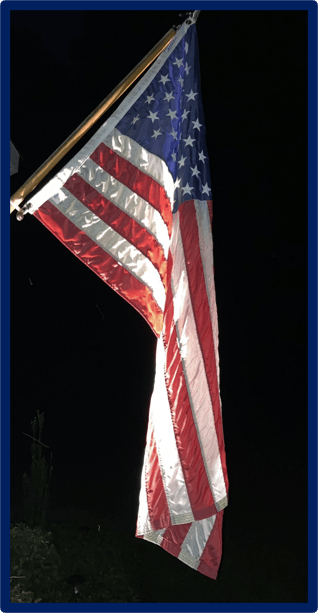
Our National Colors – I Love This Flag.

For me the National Colors represent pride for national and individual freedom, and justice – which is also a call to raise up whenever freedom or justice is compromised in our nation – as well as a extended call to rise up against other nations with compromised freedom and justice – this flag stands for freedom and justice because that’s our professed national posture.

Great loss of life, gained/lost freedoms, made/broken promises, excess/lacking equality are all part of this flag’s fabric that illustrates the history of the nation we are today – we’ve learned many hard lessons under these Colors – mostly, we’ve learned we’re not finished working toward national or individual freedom and justice  – that’s why I love this flag – this flag tells us we’ve got work to do in order to gain freedom and justice for all  – it’s up to us to continue and sustain this work, so our professed national posture is experienced by all citizens of this nation.

The National Colors are one of the most important symbols for our country – we strengthen this symbol when we stand for right, and fight against wrong within our nation – we honor and enhance this symbol when we recognize and address our flaws, as well as reinforce the fundamentals of freedom and justice.

This flag stands for our nation’s shared history, declared principles, and commitment to ‘all’ its people – when properly displayed, this is a powerful symbol of our respect for everything we proclaim to represent – when we answer the call to what this flag represents, we fulfill the purpose of this nation and her call for freedom and justice for all.

These Colors tell us that none of us are done in the struggle for freedom and justice for all  – that’s why I love this flag.

Mirror, Mirror on the Wall…

Self-awareness is critical – recognizing a disparity between behavior and belief is step one of self-awareness – knowing if our behavior does not truly mirror our professed beliefs, positions, or allegiance to justice and equality is paramount for behavior and belief to be aligned – the lack of alignment between belief and behavior is the (BLUF) source of injustice and inequality.

The application of this essential alignment applies to politics, industry, economies, governance, and the  church – the absence of self-awareness basically means the freaks just keep getting freakier generation, after generation – we’re all laced to some version of politics, economic structures, community influence,  and ethical/moral positions – we all have the ability fall into the behavior/belief disparities – just like we all have the ability to check (and correct) ourselves in relation to our behavior/belief disparities.

Nationally, and all the way down to the local community political behaviors continues to spin out of (real world) control – lies keep stacking up – demand for loyalty to positions reeking of belief/behavior disparities increase continually – cult like cronyism and group manipulation drive the false appearance of allegiance over justice/equality – individual or group postures failing to align with anything real, or relevant to justice and equality in the world is the manifestation of belief/behavior disparities  – justice, logic and rational thinking continue to shamelessly erode.

The “rinse and repeat” nature of this feels like when Arthur Miller was raked over the (early on fake news) coals by Congress for “The Crucible” i.e. non-American activities – the members of the House were in full blown Deputy-Governor Thomas Danforth mode blindly forcing the community to roll over and eat the lie(s) by way of a counterfeit abusive legal (religious spiked) witch hunt – NOTE: No, I was not alive for these events (LOL).

This multi-generational behavior/belief disparity thread is connected and crystal clear in politics, industry, economies, governance, and the  church – its driven by a lack of understand of the way things (really) are, in conflict with the way the power base wants things to be (power base = pick your poison) – then (BOOM!) straight out of the power base playbook: panic, fear, and abuse rise to the top of “go to” actions, and nonconformers are victimized under the guise of protecting the greater good…. Ugh, rinse and repeat, rinse and repeat….

So…..  mirror, mirror on the wall, is our belief and behavior aligned at all?

If you want to make a difference, then you have to be different.

Recently, the well-known pastor JD Greear Tweeted, “If you want to make a difference, then you have to be different.” His Tweet also contained an image of one loan purple plant flowering alone in a full field some random bright yellow crop – the image was perfect for message – but, did the message mirror the illustration of the image?

Even though I’m a regular follower of Pastor Greear, his Tweet didn’t sit well with me – what does it mean to be different? Different from what? Different from who? Different in what way? To be fair, when considering differences, we have to consider standards or right and wrong – sadly, the lines between good and evil have become very blurry when it comes to society, culture, politics, churches, nationalism, social justices, etc – so, when anyone professes a need for difference, perhaps they should also define what that difference is.

The meaning of, “you have to be different” completely changes with each diverse perspective in the world around us – I believe Pastor Greear meant for the reader to be different than a sinful world, and to be set apart from the world in Christ-like ways.

So, what does it look like to be Christ-like? This is low hanging Biblical fruit – but it’s important to define – you see, not everything within our blurry, upon blurrier lines claiming to be Christ-like, is actually Christ-like.

To be Christ-like is to be loving, caring, charitable, humble, patient, kind, forgiving, sincere, truthful, compassionate, values and is accepting of persons (regardless of the person) – it’s important to remember that these Christ-like attributes are not stand-alone behaviors that we apply when conditions are acceptable to us – these attributes should be constants in our behavior (regardless of conditions).

So, let’s assume that “to be different” in the context of Pastor Greear’s Tweet means for us to be Christ-like (as defined above) – let us also assume, we are to be Christ like consistently all through the blurry lines of life – so, what should this consistent Christ-like behavior apply to?

Remember, it’s a mad-mad world out there – and we’ve effectively (and sadly) divided ourselves into many social, economic, political and legal camps – shocking as this may sound, Christ-like behavior does not fit well within many of our self-aligned camps.

Self-aligned camps fall into subsets sides of these many categories:  politics – police brutality – boarder crisis – hunger – homelessness – unjust legal systems – discrimination – equality – cost of living out pacing wages – unjust lending practices – crimes covered up in churches – military veterans – social injustice – unjust tax laws – Christian Nationalism – hate crimes – Critical Race Theory – truth in our history – racism – sexism – abortion – prolife/prochoice – firearms – the list goes on and on – and we keep being more and more divided.

For me, the take-away is, none of these camps should out weight the importance of Christ-like behavior – this should apply to all of us, regardless of our political position, economic status, culture, etc.

Another pastor I follow is Pastor Joey Anthony (@JoeyTAnthony) – a recent message of his spoke to our individual responsibility when it comes to how we see sin in our own lives – he stated, “It’s one thing to be honest about your sin, yet quite another to have brokenness because of it. If there hasn’t been brokenness over your sin, then there is no real heart change that has taken place.”

My first reaction to Pastor Joey’s statement was to consider how it applied to the sins of ‘others’ – this reaction is straight out of the politically right leaning, comfortable white Christian national,  proud to be only one kind of American playbook – this is important because it illustrates how our camps have evolved into positions of greater importance than our need to be Christ-like – Pastor Joey’s statement was speaking to MY sin and MY lack of brokenness – not the sins of others.

In the context of this thread, “you have to be different” may mean to get the hell out of our camps and focus on being Christ-like.